
Business and human rights: from soft to hard law
You know something is cooking when more than 2,300 NGO representatives, government officials, academics, lawyers, investors, trade unionists and executives converge to discuss business and human rights.
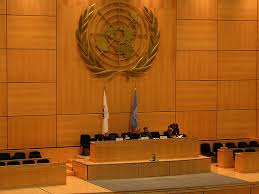
Last week they congregated under the auspices of the United Nations in Geneva for the 5th consecutive year, to discuss “embedding human rights in the rules and relationships that drive the global economy.”
The UN Guiding Principles on Business and Human Rights are premised on the idea that the state has a duty to protect human rights, that multinational corporations have a responsibility to respect human rights that goes beyond the strict boundaries of a company’s various legal entities to embrace the entire value chain and that victims of business-related human rights abuse should be provided with access to remedy.
This means that companies could be held legally responsible and liable for human rights abuses in distant nations. Knowing your supplier or business partner could take on a whole new meaning.
The UN Guiding Principles are “soft law” today. But ever since they were adopted by UN Human Rights Council in June 2011, there’s been a groundswell of activity to ensure that businesses are held responsible for harm they may cause throughout their value chain.
These principles are slowly finding their way into “hard” law. For instance, human rights clauses have been included in the Bilateral Investment Treaties that India and Brazil have recently signed with South Korea, Japan, Mozambique, Mexico and Angola. The International Bar Association’s Human Rights Institute is working on a report that advocates for governments to put greater emphasis on tackling the human rights consequences of abusive tax avoidance by multinational companies.
Moving from soft law to hard law isn’t simple — which may explain that many multinational corporations appear rather complacent, even though their business relies on globalized value chains. While 83% of businesses surveyed by the Economist Intelligence Unit perceived a responsibility to respect human rights, only 22% had a publicly available statement policy on those same rights.
It will obviously take time before the continuing UN discussions yield treaty provisions that are “hard law.” But fate does occasionally strike and an industrial catastrophe on the scale of Deepwater Horizon could make the tide unstoppable. Meanwhile, the 6th Forum on Business and Human Rights is scheduled in Geneva next year.
(by Thomas Dubois, co-founder of Woodz Public Affairs)