Fix Belgium before you try fixing the EU
The entire world was watching last month as Wallonia upheld approval of the EU-Canada trade deal.
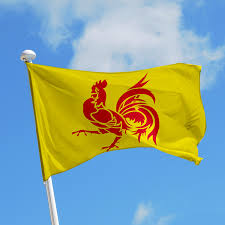
Some were quick to dispel Wallonia as a a micro-region run by Marxists. Wallonia is a smallish region perhaps, but it’s run by some canny Socialists.
Commission President Juncker showed his irritation at the signing ceremony with Canadian premier Justin Trudeau: “I invite Belgium to think through its institutional set-up when dealing with international relations,” said the Luxemburger. In other words: Belgium, get your act together.
Belgium’s institutional set-up is deeply schizophrenic. In order to stop itself from from falling apart, Belgium has devolved so much power to a rafter of regional institutions with overlapping competences that the kingdom has become a royal mess.
The EU’s 2007 Lisbon Treaty gives the European Commission and the European Parliament the right to negotiate and ratify trade deals. Everyone thought that this meant that the Belgian mess no longer mattered. Wrong.
The deal with Canada includes some bits that fall outside the EU competence. Hence the need to get it past national parliaments. Everywhere except in Belgium, where it’s the regional parliaments that are competent.
Wait. It gets even better.
Belgium has one regional parliament for Flanders; the assembly promptly approved CETA.
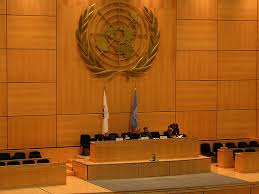
But Belgium has six other parliaments: One for the francophone region of Wallonia, one for the bilingual (but overwhelmingly francophone) region of Brussels, one for the francophone people who live spread across Wallonia and Brussels, another one for those same francophones who live only in Brussels, yet another for those living in Brussels who also speak Dutch and, finally, one for the German-speaking people who live in a small corner of Wallonia. Yup, that’s democracy à la belge.
The six bodies essentially emanate from the same political parties, although in slightly different set-ups. All had to formally approve the Canadian deal. And approve they did, but not before the leader of the French-speaking Walloons, a Socialist politician called Paul Magnette, threatened to block the whole deal.
If you’re British or American, remember that name: Magnette.
Magnette is now Wallonia’s most popular politician. His brinkmanship will no doubt help his Parti Socialiste win back votes from the rising far left. And he’s managed to maneuver the pro-trade, pro-business and pro-independence Flemish politicians into a corner — and leverage himself into a position of power in the never-ending tractations about the future (or the end) of Belgium.
Magnette has a point, though: CETA was never discussed in any meaningful way by Belgium’s 8th but most important parliament, the federal parliament. The federal government and Flanders thus wrongly thought they could safely ignore Wallonia’s objections.
Spare a thought for the British who next year must negotiate a trade deal with the EU — along with Belgium, Wallonia, Flanders, Brussels and their various parliaments. The talks are likely to face intense scrutiny by all sorts of European politicians stirred by the cocky Magnette — and not just in Belgium.
Boris and Theresa, meet Paul. I wish all of you the best of luck.
(by Martin du Bois, co-founder of Woodz Public Affairs)